Silence Is Not Empty: What a Film Leaves Unscored
Film silence can sharpen room tone, pauses and uncertainty. Learn how to hear what an unscored scene makes present—and when the absence feels thin.
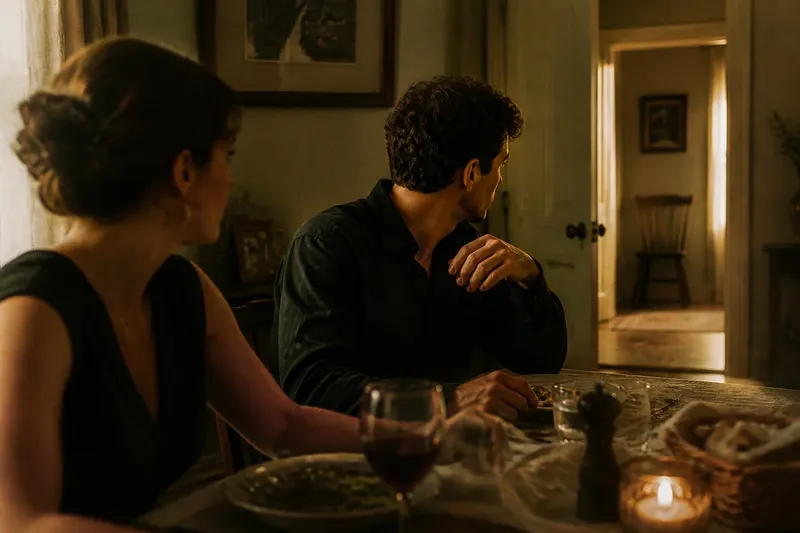
Why does a kitchen scene feel tense when nobody has added a note of music? Film silence is rarely silent: a refrigerator hums, a chair shifts, someone takes a breath and the room keeps going. Leaving a scene unscored can put those ordinary sounds and the gaps between them in the foreground, without telling us exactly how to feel.
That choice is not automatically subtle or serious. It can create intimacy, expose a character’s hesitation or make an ordinary action seem newly uncertain. It can also leave a scene with too little shape. The useful question is not whether music is present, but what the soundtrack asks us to attend to in its place.
What counts as film silence?
Film silence usually means an absence of score, not an absence of sound. A director and sound team may leave dialogue, footsteps, traffic, ventilation or room tone in place while withholding music. Even a nearly soundless passage has been shaped: a quiet track can make a small noise conspicuous, while a complete cut in sound can feel like a rupture.
Room tone is the low, steady sound associated with a space. It may be a heating system, distant road noise or the soft acoustic character of a room. In a scene without score, that bed of sound can keep the setting physically present while allowing a pause or movement to carry unusual weight.
It helps to distinguish this from a deliberate sound drop. If the soundtrack cuts out at a sudden impact or decision, the change itself draws attention. If the scene simply continues with its ordinary sounds, the absence of music may be less noticeable at first—and more revealing over time.
What does leaving music out do?
Withholding music can make attention less directed. A score often supplies rhythm, emotional emphasis or a sense of scale; without it, we may listen for what a character does rather than receive a musical cue about what that action means. A hand left on a door handle can remain an action, a delay or a refusal.
Environmental sound can also make a scene feel inhabited. The click of a radiator, a bus passing outside or cutlery moved against a plate gives the image a material setting. These details need not be loud. Their quiet presence can make a character’s stillness seem more exposed, because the world around them has not stopped.
Pauses become particularly legible when there is no score to smooth them over. A character may take a breath before answering, or leave a question unanswered while another person waits. The pause need not announce a secret; it can simply let the uncertainty remain unresolved for a moment.
Unscored scenes can also resist emotional instruction. A viewer may be unsure whether to read a silence as grief, anger, embarrassment or exhaustion. That uncertainty can suit a scene in which the character cannot yet name what they feel. It can also be frustrating if the film gives us no other meaningful detail to work with.
How can you hear what is doing the work?
Begin with the sound that remains, not with the absence of music. Notice whether the scene gives prominence to a voice, a repeated mechanical noise, movement in the room or the distance between sounds. Ask whether the sound changes as the exchange changes, or stays indifferent to it.
- Listen for room tone. A steady hum can make a pause feel ordinary and lived-in; a sudden loss of that bed can make the space feel altered.
- Notice close sounds. Breath, cloth, a cup set down or a foot shifting may bring attention to a character’s body without spelling out an emotion.
- Track repetition. A clock, passing vehicle or recurring door sound can establish a rhythm that the scene’s dialogue refuses to follow.
- Watch the timing. If music enters only after a decision, the entrance may frame the decision differently from a score that was present throughout.
- Ask what remains ambiguous. If several readings still fit the scene, the sound may be preserving uncertainty rather than failing to clarify it.
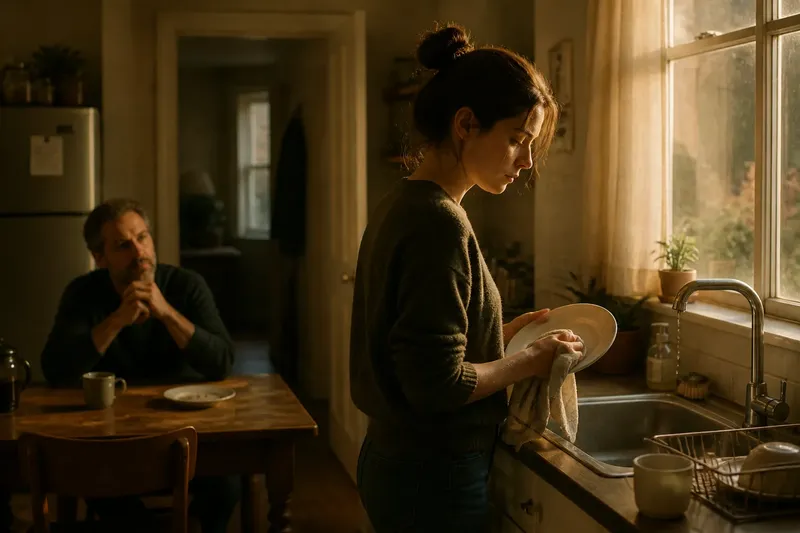
Say you are watching an invented scene in which a daughter stands by a kitchen sink after her father asks whether she is staying. No score enters; a tap drips, and she dries the same plate for a little too long before answering. The expected observable result is not a fixed reading of her feelings, but attention to the delay and the sounds that continue around it.
That is a useful distinction: an unscored passage can direct attention without dictating interpretation. The viewer hears a particular delay, but still has to decide what it means.
When does silence feel thin?
An unscored scene can feel under-shaped when its remaining sounds do not establish a useful relation to the image, action or performance. A long pause is not inherently meaningful, and a low room hum does not turn hesitation into insight by itself. If nothing changes in the scene’s sound or behaviour, the absence of music may register as mere vacancy.
Some scenes also rely on music for a deliberate contrast with what is shown. Removing it may strip away a counterpoint that complicates the image, rather than making the image more honest. A bright tune over a difficult conversation, for instance, can create a tension that environmental sound alone would not provide.
There is no universal test for whether a scene needs a score. Consider whether music would add a distinct layer—rhythm, emotional contradiction, a shift in scale—or merely repeat what the actors and soundscape already convey. Silence earns its place when the scene becomes more attentive, not simply quieter.
Why does a score enter later?
A late musical entrance can change how we understand the sound that came before it. If a scene has carried only room tone and small movements, a new melody may feel intimate, consoling, ominous or deliberately out of step. Its force comes partly from the contrast with the texture the film established.
The entrance can also mark a change in the scene’s relation to the character. Music may arrive after a choice, once an emotion becomes visible, or while the character is still withholding it. Listen for whether the score follows the action, anticipates it or seems to belong to a different emotional perspective.
Silence before music is therefore not just a waiting area. It can set a threshold: the first note tells us that the film has changed its way of addressing the moment. If the score enters too readily, that shift may feel routine; if it arrives after an uneasy pause, even a modest phrase can seem to alter the room.
Questions about film silence?
Does film silence mean no sound at all?
Usually, no: it means that music has been withheld while other sounds remain. A scene can contain traffic, breath, room tone and dialogue while still being unscored. A sudden cut to near-total silence is a separate, more conspicuous sound choice.
Why do quiet scenes feel tense?
Quiet can make small actions easier to notice, especially when the scene gives a pause or an ordinary sound unusual prominence. Tension comes from the relation between what is audible, what is delayed and what remains unknown, rather than from low volume alone.
How can I tell whether a scene is unscored?
Listen for music that carries melody, harmony or a sustained musical rhythm beneath the action. Then attend to what remains: dialogue, ambience, effects or near-silence. A sound can be shaped and expressive without functioning as score.
Does an unscored scene always feel more realistic?
No. Environmental sound may make a scene feel physically grounded, but the mix can still be highly selective, bringing a breath or distant noise forward for expressive reasons. Realism is one possible effect, not a rule that follows from leaving music out.
What should you listen for?
When considering film silence, attend to the scene’s surviving sounds, the timing of its pauses and the moment music does—or does not—arrive. Ask whether the soundtrack opens space for uncertainty or leaves the scene without a meaningful cue. The answer may change as the exchange unfolds.
The most revealing detail can be small: a breath taken before an answer, a hum that continues through a tense exchange, or a score that waits until the choice is already made. Film silence is not empty when those details give the viewer something specific to hear and still leave room to judge what it means.